☀️ Solar Activity
Solar Flux (SFI)
Emission intensity (10-300)
A-Index
Geomagnetic activity (0-400)
K-Index
Magnetic disturbance (0-9)
Updated: --:-- UTC
View NOAA Space Weather ↗📻 GMRS Band (462/467 MHz)
Frequency
462-467 MHz
Range
5-25 miles
Propagation
Calculating...
• UHF Personal Radio Service • Line-of-sight propagation • Excellent for local repeater use • Weather resistant
Space weather for radio communications ↗📻 2 Meter Band (144 MHz)
Frequency Range
144-148 MHz
Wavelength
2 meters
Propagation
Calculating...
• VHF amateur band • Excellent for local repeaters • Line-of-sight communication • Popular for emergency ops
Space weather for radio communications ↗📡 70cm Band (430 MHz)
Frequency Range
420-450 MHz
Wavelength
70 centimeters
Propagation
Calculating...
• UHF amateur band • High data rates • Shorter range than 2m • Satellite communication capable
Space weather for radio communications ↗📊 Band Propagation Status
GMRS
2 Meter
70cm
📈 Solar Index Trends
🎯 Conditions Guide
Excellent ✓
SFI > 150, A-Index < 10
Best propagation conditionsGood ✓
SFI 100-150, A-Index 10-30
Normal propagation conditionsFair ~
SFI 50-100, A-Index 30-60
Degraded propagationPoor ✗
SFI < 50, A-Index > 60
Poor propagation conditions🌐 Live Space Weather & Propagation
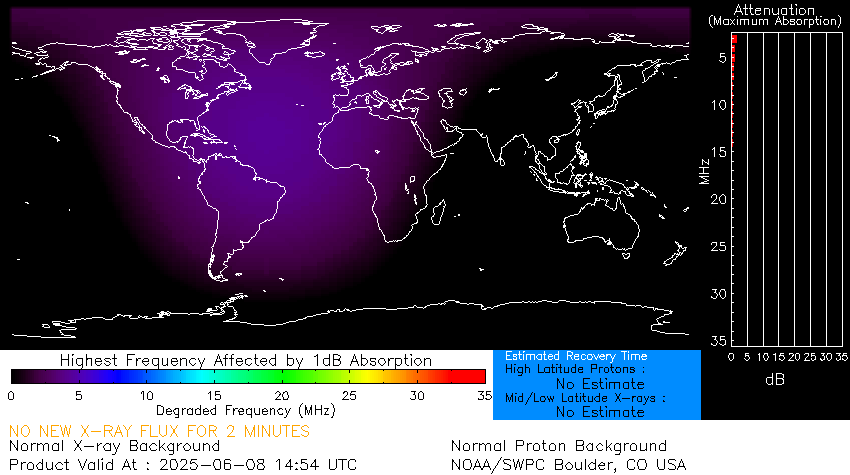
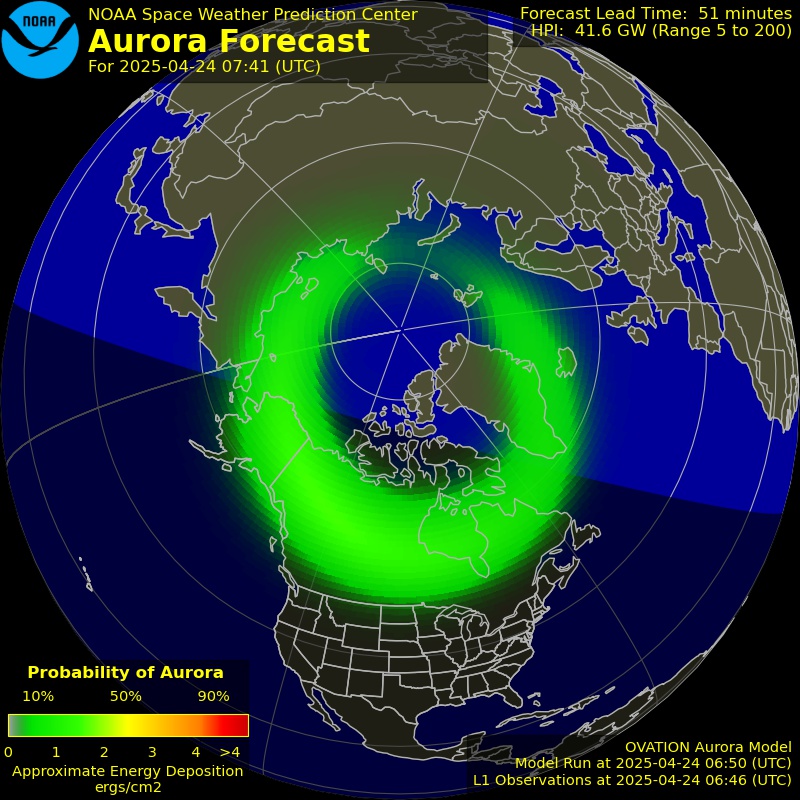
Live images may take a few seconds to load. These external displays come from HamQSL and NOAA/SWPC.
HamQSL Solar-Terrestrial Data
NOAA D-Region Absorption
NOAA Aurora Forecast
NOAA X-Ray Flux

ℹ️ Understanding Band Conditions
GMRS Band (462/467 MHz)
General Mobile Radio Service provides reliable local communication up to 25 miles with repeaters. Primary frequency for PARMA 575. Minimal solar activity impact. Excellent for emergency communications and community events. Uses standard GMRS radios.
Solar Flux Index (SFI)
Measures the sun's radio emissions at 10.7 cm wavelength. Higher values indicate increased solar activity, improving long-distance propagation on HF bands. The 2m, 70cm, and GMRS bands are less affected by solar activity than HF bands.
A-Index & K-Index
Measure geomagnetic disturbances caused by solar wind. A-Index is a 24-hour average (0-400), while K-Index is instantaneous (0-9). High values indicate geomagnetic storms that can cause aurora activity and affect some propagation.
2 Meter Band (VHF)
Primarily line-of-sight communication with occasional sporadic E propagation. Regular activity during meteor showers. Less affected by solar activity than HF bands. Range extends to 50+ miles under normal conditions. Excellent for ham radio repeaters.
70cm Band (UHF)
Even more line-of-sight than 2m with shorter typical range. Excellent for satellite communication and high-speed data. Better urban propagation due to building penetration. Less influenced by space weather events than lower frequency bands.
When to Use Each Band
GMRS: Daily local communications, repeater use, emergency ops. 2m: Ham radio repeaters, local nets, occasional DX. 70cm: High-speed data, satellites, urban communication, digital modes.